
This article contains affiliate links. We may earn a commission at no extra cost to you if you make a purchase through our links.
7 Best Grief Journals for Processing Loss in 2026
Why Journaling Matters in Grief
Grief doesn’t follow a timeline or a straight path. It loops back, surprises you at unexpected moments, and demands space to be processed. While therapy, support groups, and community matter, so does a quiet moment alone with your thoughts—and a blank page that won’t judge you for feeling messy, angry, or contradictory all at once.
A good grief journal gives you permission to write whatever comes. It holds the contradictions: the memories that make you smile and the rage that follows. We tested and evaluated grief journals based on paper quality, prompt design (or lack thereof if you prefer blank space), durability, and how well they actually support the hard work of processing loss. Some offer structure and guidance; others provide nothing but room to breathe. All seven here genuinely support the grieving process.
1. The Healing Reflection Journal

This is grief journaling with a framework. The Healing Reflection Journal uses a weekly structure built around five core questions: what are you missing most, what memories surfaced this week, where did you feel support, what emotions dominated, and what small thing moved you forward? The prompts aren’t invasive—they’re more like gentle guideposts that help you move from raw emotion into reflection.
The journal spans 52 weeks, so it’s designed as a year-long companion. The paper is thick enough that even gel pens don’t bleed through, and the binding holds up to regular use. Sections for tracking patterns help you see which times of year hit hardest, which is genuinely useful information for preparing yourself emotionally.
Best for people who want structure but not prescription. If you freeze looking at a blank page, this journal does the hard work of knowing what questions matter.
- Weekly prompts that build reflection without forcing positivity
- Thick, fountain-pen-friendly paper
- Pattern-tracking spreads help identify emotional cycles
- Attractive hardcover design; you won’t hide it away
- 52-week structure gives it natural endpoint and renewal option
Cons:
- Weekly structure can feel rigid if grief doesn’t follow a schedule
- One year of use; you’ll need a new journal after completion
Verdict: Get this if you grieve better with structure and want a road map through the first year.
2. Moleskine Cahier Softcover A5
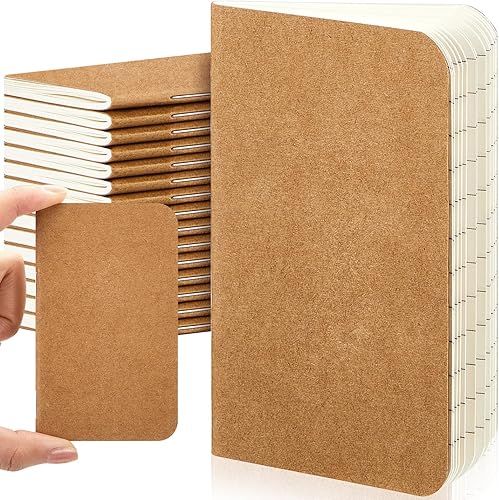
Sometimes the best journal is the simplest one: blank pages, durable paper, a cover that fits in your bag. The Moleskine Cahier is lightweight and flexible, which means you’ll actually carry it. The paper is the real story here—it’s thicker than department-store notebooks, designed to handle fountain pens and markers without feathering or buckling.
There’s something to be said for a journal that demands nothing from you. No prompts, no structure, no pressure to fill pages with the “right” thoughts. Some days grief needs blank space. The softcover feels vulnerable, which matches the work itself.
Best for writers who already know their voice and need room to find it on the page.
- Affordable ($16-22) so you can have multiple copies without guilt
- High-quality paper resists bleeding and feathering
- Lightweight and portable for writing anywhere
- Blank pages eliminate pressure to answer questions
- Design is understated; grief journaling feels private
Cons:
- Softcover means minimal protection if it gets crammed in a bag
- No page numbers or indexing if you want to find specific entries later
Verdict: Buy this if you want beautiful, functional simplicity and plan to write regularly.
3. Leuchtturm1917 Hardcover A5 Numbered

The gold standard for durability. This journal’s hardcover won’t warp, the elastic band keeps it closed, and the numbered pages let you create an index—useful if you want to find that one entry about a specific memory months later. The paper quality is exceptional, handling pencils, pens, markers, and even watercolor without complaint.
At $20-28, it’s an investment, but it’s the kind of journal you’ll keep for years. Some people keep their grief journals forever, creating a record of their healing. This journal won’t fall apart after a year of daily writing.
Best for people who want their grief documented in a vessel they’ll actually preserve.
- Hardcover protection; survives a year of daily use intact
- Numbered pages with index—actually useful for reflection later
- Exceptional paper quality for all writing instruments
- Elastic band closure keeps journal from opening in your bag
- Ribbon bookmark lets you jump between sections
Cons:
- Blank pages offer no structure or prompting (some will see this as pro)
- Hardcover is heavier than softcover options
Verdict: Choose this if you see your grief journal as an heirloom, not a workbook.
4. The Grieving Heart: A Guided Journal for Loss

This journal was created by grief counselors, which shows. It opens with sections on understanding different types of loss (death, divorce, career, identity, relationship change) so you can acknowledge that grief isn’t one-size-fits-all. The prompts are thoughtfully written—they’re grounded in grief research and therapeutic techniques like narrative therapy and somatic awareness.
You’ll find prompts like “Write about the last conversation you had” and “What would you want them to know?” alongside space for drawing or collaging, recognizing that grief lives in your body, not just your mind. The journal spans about three months of focused work, designed as an intensive dive rather than a year-long commitment.
Best for people processing fresh loss who want therapeutic guidance without the cost of ongoing counseling.
- Designed by grief counselors with evidence-based techniques
- Addresses multiple loss types (death, job, relationship, identity)
- Prompts go deeper than generic journaling—they guide actual processing
- Includes space for art and non-written expression
- Intensive 12-week structure prevents indefinite rumination
Cons:
- Heavier emotional lifting than open-ended journals; not for casual daily writing
- Shorter timeframe (12 weeks) means grief work extends beyond the journal
Verdict: Use this if you want guided therapeutic work and are processing a recent, acute loss.
5. Penned & Pressed Leather Journal

This is the journal someone gifts you and you keep for decades. Handmade leather cover, 256 blank pages, heavyweight paper that feels luxurious. There’s psychology to this: you’re more likely to write thoughtfully in a journal that feels precious. And there’s something meaningful about processing grief in an object that’s designed to last.
Leather develops patina with age—scuffs and wear become character. Some people find this metaphor powerful in grief: the object changes and holds the marks of its use, just like we do. At $50-60, it’s expensive, but it’s the kind of thing you’ll pull out years later and be grateful you kept.
Best for people who want their grief contained in something beautiful and permanent.
- Handmade leather cover improves with age and wear
- Heavyweight paper feels substantial and luxurious
- 256 pages gives enough room for months of deep writing
- Customization options (initials, color) create ownership
- Durability means it becomes a record you’ll actually keep
Cons:
- Price point ($50-60) is steep for trying out journal styles
- Blank pages offer no structure; you’re on your own for prompts
Verdict: Buy this if you’re writing through grief as a long-term process and want a journal that’ll become an heirloom.
6. The Sorrow to Strength Journal: Week-by-Week Grief Navigation

This journal takes a different approach: instead of daily or weekly journaling, it structures itself around the actual emotional arc of grief. Weeks 1-4 focus on shock and denial, weeks 5-8 on anger and processing, weeks 9-12 on sadness and integration, and weeks 13-16 on meaning-making and moving forward. This isn’t linear grief doctrine—there’s room to move back and forth—but it acknowledges that raw shock feels different from month-three grief.
Each week includes three prompts, space for free writing, and a check-in question that helps you notice shifts in your emotional landscape. The paper is quality, the binding is solid, and it strikes a balance between structure and flexibility. You could work through it in four months of intense focus or spread it across a longer timeline depending on your pace.
Best for people who want scaffolding that matches the actual emotional progression of loss.
- Week-by-week structure mirrors actual grief progression
- Emotional framework helps you understand where you are in the process
- Prompts are thoughtful without being prescriptive
- Balanced paper quality and binding durability
- Flexible timeframe—move through at your pace, not a calendar’s
Cons:
- Week labels can feel limiting if your grief doesn’t follow the outlined phases
- Not ideal for acute loss in the first week or two—too much structure too early
Verdict: Choose this if you’re several weeks into grief and want a map for what comes next.
7. Strathmore 400 Series Mixed Media Journal

Not all grief processing happens with words. Some happens in color, in image, in the physical act of making marks. The Strathmore is a working journal designed for mixed media—paint, collage, marker, pencil, ink all work beautifully on its paper. It’s blank, but its weight and tooth invite experimentation.
This is the choice for people who grieve through making: collaging photographs, painting emotions, drawing what words can’t hold. The hardbound cover protects pages that might buckle under watercolor or heavier pigment. At $20-30, it’s affordable enough to use without preciousness, durable enough to handle real grief work.
Best for visual thinkers or anyone whose grief lives in their hands as much as their heart.
- Heavy paper (90 lb) handles paint, watercolor, and heavy pigment
- Mixed-media-specific design invites experimentation
- Hardcover binding keeps pages from warping under wet media
- Opens up grief work beyond writing into visual and tactile expression
- Affordable price makes it feel like a tool, not a precious object
Cons:
- No prompts or guidance; requires self-direction for mixed media exploration
- Heavier paper and binding make it bulkier to carry around
Verdict: Get this if your grief is visual or you need to process through making, not just writing.
Conclusion
The best grief journal is the one you’ll actually use. If prompts feel suffocating, go blank. If blank pages feel paralyzing, choose structure. If writing alone feels incomplete, try mixed media. Grief isn’t uniform, and neither should the tools you use to process it. Most people find they want different journals at different stages—intensive therapeutic work in one phase, simple space to breathe in another. Start with what calls to you right now, and know that your needs might shift. The journals that matter are the ones that meet you where you are, not where you think you should be.
You might also like: How to Choose the Right Grief Support Group: A Complete Buyer’s Guide (2026)