This article contains affiliate links. We may earn a commission at no extra cost to you if you make a purchase through our links.
The Mountain’s Roar
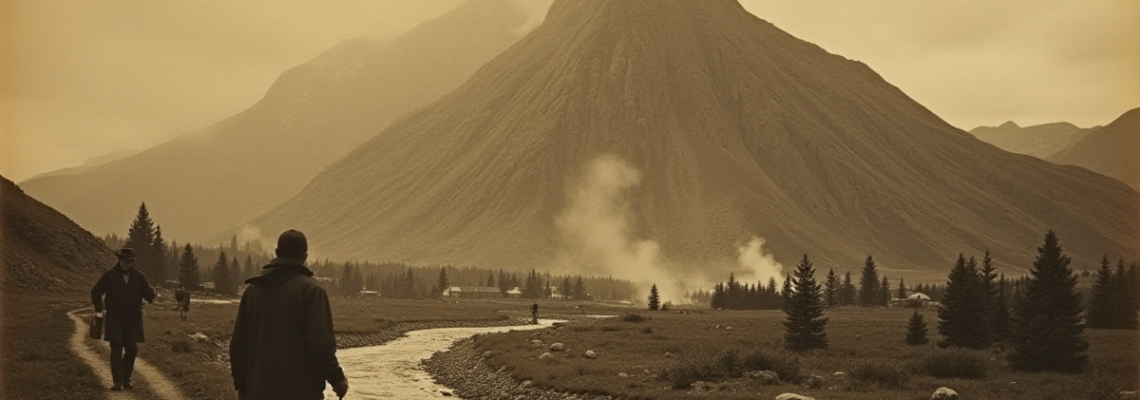
At 6:45 in the morning on March 18, 1971, the men of the Chungar mining camp were still sleeping in their barracks, high in Peru’s Cordillera Blanca mountains. Some were already stirring—the zinc mine operated on a tight schedule, and the first shift would begin within the hour. The camp sat at 14,000 feet above sea level, surrounded by glacial peaks and the stark beauty of one of South America’s most dangerous geological zones.
What none of them knew was that the mountain above them was dying.
The Yanawayin Lake, a glacial impoundment that perched on the slopes above the camp, had been filling for weeks with meltwater from the surrounding glaciers. The early 1970s had brought warmer-than-average temperatures to the Andes, accelerating the spring thaw. The lake, which local geologists would later describe as essentially an “ice dam with bad engineering,” had reached a critical point. Geologists estimate the water pressure and the instability of the surrounding mountainside—already scarred by extraction activities nearby—created a catastrophic failure waiting to happen.
At 6:47 a.m., it happened.
A massive section of mountainside, saturated with glacial melt and destabilized by years of mining activities in the adjacent area, simply gave way. Between 50 and 100 million cubic meters of rock, ice, and earth cascaded down the slope with apocalyptic force. Witnesses who survived the initial moments described it as a roar that seemed to come from the earth itself—a sound so profound that it registered as almost silence, as if the universe had paused to allow for something catastrophic to enter it.
The debris field rushed downward at speeds exceeding 100 miles per hour, carrying the contents of Yanawayin Lake with it. The avalanche buried the Chungar mining camp under tens of meters of rubble, rock, and muddy debris. In less than three minutes, a community of workers—men from across Peru who had come to the mountains seeking wages and a better life—had been erased from the landscape.
The Margin of the Machine: Mining in Peru’s Andes
To understand why 200 people were sleeping in a mining camp directly beneath an unstable glacial lake, you need to understand Peru in 1971—and the desperation that mining represented for the nation’s economy.
Peru’s military government, under General Juan Velasco Alvarado (who had seized power in 1968), was aggressively nationalizing and expanding the country’s mining sector. Mining represented Peru’s lifeline: copper, zinc, silver, and other metals were the nation’s primary export and the government’s primary source of hard currency. The Chungar zinc mine was one of Peru’s major high-altitude operations, run by the Cerro de Pasco Corporation, one of the largest mining companies in the country.
The Andes are unforgiving. The cold is severe, the altitude disorienting, the weather unpredictable. Mining camps like Chungar were constructed in these places not because they were safe, but because the ore was there. The workers who staffed them—often rural Quechua men and recent migrants from the highlands seeking better wages than agricultural work offered—had few options. The jobs paid relatively well by Peruvian standards of the era. Yes, they were working at 14,000 feet. Yes, the conditions were brutal. But for a man with a family to feed, the Chungar mine was opportunity.
The mining operation had been in existence for decades, and the geological hazards had been documented. Glacial lakes in the Andes had always been a known risk. But knowledge and action are not the same thing. Building a dam, installing proper monitoring systems, or evacuating the camp would have cost money and time. It would have complicated operations. So the mine continued, and the workers continued, and the mountain continued to warm.
The Search for Survivors That Never Came
The first indication of the disaster came from the absence of radio contact. Mining camps in remote regions maintained regular communication with regional centers. By mid-morning on March 18, when the scheduled radio check-in from Chungar did not materialize, alarm spread through Peru’s mining authorities.
The first rescue teams to reach the site reported a landscape transformed into an alien terrain of destruction. The entire camp appeared to have been obliterated. The barracks were flattened or buried. Equipment worth millions of dollars was shattered across the mountainside. The access road was impassable. And everywhere, there was the smell of wet earth and broken stone.
Rescue operations began immediately, but the Peruvian military and mining company officials understood almost at once that this was not a rescue operation—it was a recovery operation. The scale of the disaster was too immense. The debris field was too vast. No one could have survived being buried under meters of rock and mud traveling at over 100 miles per hour.
As news of the Yanawayin disaster spread, Peruvian newspapers began publishing lists of the missing. Two hundred workers were confirmed dead. Some estimates, particularly in international reports, suggested the number might be higher—possibly as many as 250. The exact figure was never conclusively established; some bodies were never recovered. Many of the men had been recently hired and their hiring records were incomplete. Families across Peru began searching for news of their loved ones.
The government declared a national period of mourning. President Velasco issued statements promising investigations and reforms. The Cerro de Pasco Corporation issued statements expressing their condolences and pledging cooperation with any inquiry.
Why This Matters Today
The Yanawayin disaster remains one of the deadliest mining-related disasters in South American history, yet it is largely forgotten outside of Peru and among specialists in mining history. This forgetting itself is significant. The disaster happened to poor workers in a remote place in a non-English-speaking country. It happened to indigenous and rural workers whose deaths did not receive the international attention that similar disasters in North America or Europe might have received.
Today, as climate change accelerates glacial melt across the Andes and worldwide, the Yanawayin disaster stands as a cautionary tale. Glacial lakes—”proglacial lakes” in the scientific terminology—are becoming more common and more unstable as glaciers retreat. In Peru, Ecuador, Bolivia, and Central Asia, these lakes pose ongoing hazards to communities downstream and to mining operations that operate in these regions. The lessons that should have been learned from Yanawayin—that you cannot treat glacial hazards as acceptable operational costs, that workers deserve safety over profit—remain unlearned in many places.
The Yanawayin disaster also revealed the asymmetries of power that characterized (and still characterize) resource extraction in the developing world. Workers had no seat at the table when decisions were made about whether their workplace was safe. They had no real choice about accepting risk because the alternative—unemployment—was worse. The Velasco government’s investigation into the disaster was limited and its findings were compartmentalized. The Cerro de Pasco Corporation faced no serious consequences. Mining in the Peruvian Andes continued much as before.
On March 18, 1971, the mountain broke, and 200 people died because they were workers who could be replaced. That remains, perhaps, the most enduring lesson of the Yanawayin disaster—and the most troubling one.