This article contains affiliate links. We may earn a commission at no extra cost to you if you make a purchase through our links.
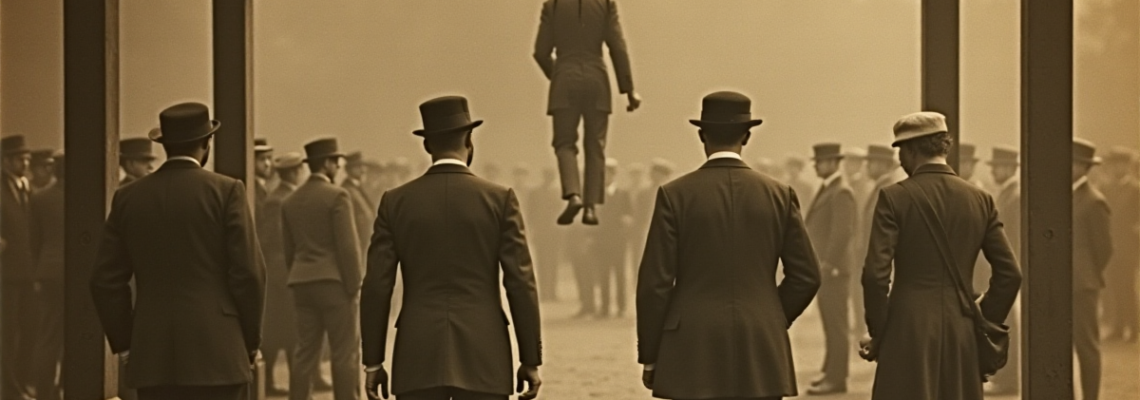
In the cold, pre-dawn darkness of March 23, 1931, the silence inside Lahore Central Jail was broken by the sound of three young men defiantly chanting. Their voices, clear and unwavering, echoed through the stone corridors: ‘Inquilab Zindabad!’—‘Long Live the Revolution!’ They were not pleading for mercy; they were singing songs of freedom, reciting poetry, and shouting slogans until the very last moment. Bhagat Singh, just 23 years old, Shivaram Rajguru, 22, and Sukhdev Thapar, 23, were walking to the gallows, their execution advanced by eleven hours to prevent the mass protests brewing outside the prison walls. As the nooses were placed around their necks, they embraced each other, their final act one of solidarity. At the appointed hour, the trapdoors swung open. The three bodies fell. In that moment, the British Raj did not just execute three prisoners; it created three immortal martyrs whose deaths would irrevocably change the course of the Indian independence movement.
The Spark: From Protest to Protestor
To understand the gravity of that day, one must go back to 1928. The Indian National Congress, led by figures like Mahatma Gandhi and Jawaharlal Nehru, was advocating for self-rule through non-violent civil disobedience. But a younger, more radical faction believed the British would only respond to force. Their anger crystallized around the Simon Commission, a British delegation sent to discuss constitutional reforms that included not a single Indian member. Protests flared across the country.
🛡️ Browse Safely with Surfshark
VPN + Antivirus + Ad Blocker — one subscription, total protection
Get Surfshark Deal →During one such protest in Lahore, the police launched a lathi charge—a brutal baton assault. The officer leading the charge was Deputy Superintendent of Police James A. Scott. The blows were so severe that veteran freedom fighter Lala Lajpat Rai, a revered leader known as the ‘Lion of Punjab,’ succumbed to his injuries weeks later. The nation mourned; the young revolutionaries of the Hindustan Socialist Republican Association (HSRA) vowed revenge.
The Assassination and the Trial
Bhagat Singh, already famous for his intellectual rigor and commitment to socialism, helped mastermind the operation. On December 17, 1928, Bhagat Singh and Rajguru lay in wait outside the Lahore police headquarters. Their target was Scott. But in a case of mistaken identity, they shot and killed Assistant Superintendent John P. Saunders. The act was audacious, carried out in broad daylight. The HSRA distributed leaflets declaring that the murder of a ‘respectable leader’ like Lala Lajpat Rai had been avenged.
This act set in motion the events that would lead to the gallows. Bhagat Singh and his compatriot Batukeshwar Dutt then orchestrated another symbolic protest. On April 8, 1929, they threw two low-intensity bombs and leaflets from the visitors’ gallery of the Central Legislative Assembly in Delhi. Their goal was not to kill, but to ‘make the deaf hear’—to protest repressive laws. They courted arrest, turning their trial into a political platform. It was during this period that Bhagat Singh, Sukhdev, and others were linked to the Saunders murder.
The ensuing trial was a spectacle. The young men refused to be mere defendants; they were accusers. They hunger-struck for weeks to protest the inhumane conditions in British jails, their emaciated images splashed across newspapers, galvanizing public sympathy. Bhagat Singh, with his sharp wit and formidable intelligence, cross-examined witnesses and delivered powerful speeches on the right to independence. They were no longer seen as murderers, but as patriots challenging an unjust empire.
The Stakes: Two Visions for India
The impending executions created a national crisis. The British authorities, led by Viceroy Lord Irwin, were determined to demonstrate that violent rebellion would be met with the full force of the law. They saw the trio as dangerous terrorists whose elimination was necessary to maintain control.
Meanwhile, a massive clemency campaign swept India. Petitions with hundreds of thousands of signatures poured in. Mahatma Gandhi, while morally opposed to their methods, engaged in fraught negotiations with Lord Irwin. Many hoped Gandhi could secure a commutation of the death sentences as part of the Gandhi-Irwin Pact, which had just ended the Salt Satyagraha. But the Viceroy stood firm, and Gandhi, prioritizing the broader political agreement, did not make it a deal-breaker—a decision for which he would face intense criticism.
The stakes could not have been higher. For the British, it was about authority. For the Indian public, it was about justice. And for the revolutionaries themselves, it was about legacy. They had written letters from jail making it clear they welcomed martyrdom, believing their deaths would serve the cause far more than their lives ever could.
The Aftermath: Martyrs Are Born
The news of the early morning hanging on March 23, 1931, sent shockwaves across the subcontinent. The authorities, fearing an uprising, secretly cut the bodies into pieces, stuffed them into sacks, and smuggled them to the banks of the Sutlej River, where they were hastily cremated. But this act of clandestine disposal backfired spectacularly. When the public learned of the secretive funeral, it only deepened the outrage and sanctified the martyrs.
Bhagat Singh, Rajguru, and Sukhdev instantly became folk heroes. Their photographs were displayed in millions of homes. Songs, poems, and plays celebrated their sacrifice. The HSRA’s slogan, ‘Inquilab Zindabad,’ became a universal rallying cry for the freedom movement, adopted even by the non-violent wing of the Congress. The execution had stripped the British Raj of any remaining moral legitimacy in the eyes of many Indians. It radicalized a generation of youth who saw that peaceful protest had its limits, accelerating the push for complete independence, or Purna Swaraj.
Why This Matters Today
The legacy of Bhagat Singh, Rajguru, and Sukhdev is woven into the fabric of modern India. They are remembered not just for their revolutionary actions, but for their radical vision. Bhagat Singh was a staunch atheist and socialist who dreamed of an India free not only from colonial rule but also from the shackles of casteism, communalism, and economic inequality. His writings from prison reveal a sophisticated political thinker far ahead of his time.
On this day in history, March 23, is observed as Martyrs’ Day (Shaheed Diwas) in India. Their story is a permanent reminder of the immense cost of freedom and the complex, often painful, choices that define a struggle for liberation. It forces us to confront difficult questions about the ethics of political violence and the price of principle. The three young men who walked to the gallows singing did not live to see the independent India they fought for, but their sacrifice ensured that the dream of Inquilab—revolution—would never die.
🛡️ Browse Safely with Surfshark
VPN + Antivirus + Ad Blocker — one subscription, total protection
Get Surfshark Deal →🛡️ Total Device Protection
Surfshark Antivirus — lightweight, real-time threat detection on all devices
Get Surfshark Antivirus →