This article contains affiliate links. We may earn a commission at no extra cost to you if you make a purchase through our links.
An Unlikely Defender in the Prairie Press
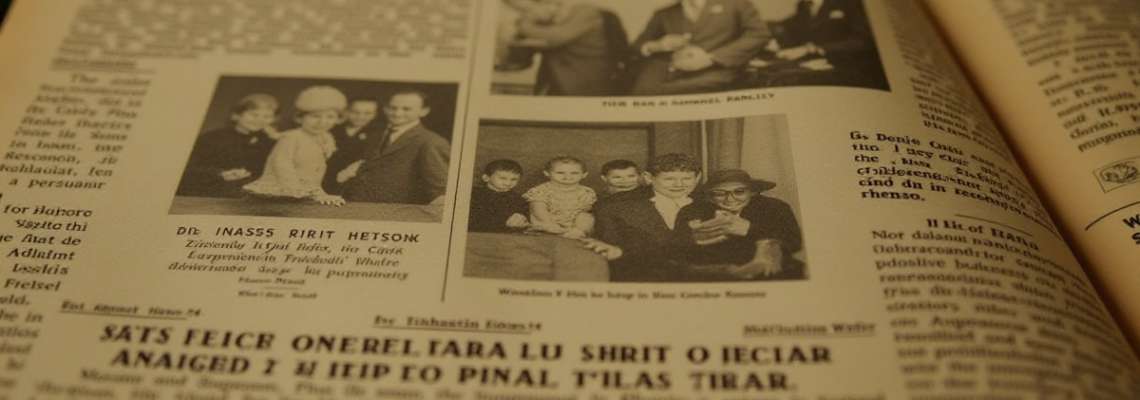
The blizzard had finally relented over Holt County, Nebraska, leaving behind a world of muffled white and a biting March wind. In the offices of The Frontier in O’Neill, the clatter of typewriters and the smell of ink filled the air as the March 24, 1955 edition went to press. Amidst the local news—a fatal car-deer collision, a mother of five laid to rest, a sideswipe accident in the storm—one column stood out, not for reporting an event, but for championing a quiet revolution.
Romaine Saunders, the retired former editor of the paper, used his weekly “Prairieland Talk” column to defend a piece of legislation that had sparked outrage in newsrooms across the state. A state senator, whom Saunders praised for having “a heart equal to an able head,” had proposed a law to close juvenile court hearings to the public and the press. The goal was simple: to give kids who got into trouble “a break,” protecting them from the lifelong stigma of damaging publicity.
🛡️ Browse Safely with Surfshark
VPN + Antivirus + Ad Blocker — one subscription, total protection
Get Surfshark Deal →“But here they came, the defenders of our freedoms with a cry of ‘the peoples’ right to know.’” Saunders wrote with palpable disdain. “Is there nothing that I have a right not to know, that a neighbor’s boy has a right for me not to know?”
In 1955, this was a radical question. The post-war era was one of conformity and public scrutiny; a juvenile arrest could brand a child and a family forever. Saunders and the bill’s supporters, including Dr. Frank A. Court, the influential pastor of St. Paul Methodist Church in Lincoln, saw the legislation not as an attack on freedom, but as an act of compassion—a necessary shield for the most vulnerable.
The Clash of Two American Ideals
The debate unfolding in Nebraska’s unicameral legislature was a microcosm of a national tension. On one side stood the First Amendment, the bedrock principle of a free press and an open society. “Some newspaper guys cried out in horror,” Saunders noted, that the bill violated this sacred trust. The press saw itself as the public’s watchdog, and closed doors, even in sensitive cases, smelled of corruption and backroom deals.
On the other side was a growing, modern understanding of child psychology and rehabilitation. The juvenile court system itself, established in the late 19th and early 20th centuries, was founded on the idea that children were not miniature adults. They were malleable, capable of reform, and their mistakes should not cement their destinies. Publicizing their names and alleged crimes in the local paper—where every neighbor, teacher, and future employer would see it—ran utterly counter to that rehabilitative ideal.
Saunders anchored his argument not in legal theory, but in prairie morality and personal memory. He recalled a childhood incident where he and a friend plotted to steal apples. Their plot was foiled not by police or court hearings, but by the kindness of the orchard owner, who invited them to take what they wanted. “That did something to correct ‘juvenile delinquency,’” Saunders argued, “that a public trial in juvenile court, press and the public admitted, could not have done.” His point was profound: redemption often happens in the quiet, private space of mercy, not the public spectacle of shame.
What Happened Next? The Long Road to Privacy
The fate of that specific 1955 Nebraska bill is lost to the finer details of legislative history, but the battle Saunders chronicled was far from over. The clash he documented—between the public’s right to know and a child’s right to privacy—would rage for decades.
It took until 1967, in the landmark Supreme Court case In re Gault, for the rights of juveniles in court proceedings to be significantly bolstered, though that case focused on legal representation, not privacy. The movement toward sealing juvenile records and closing hearings gained momentum state by state throughout the 1970s and 80s, driven by the very logic Saunders and Dr. Court espoused. Today, juvenile court proceedings are presumptively closed or confidential in most U.S. jurisdictions, a direct legacy of this earlier struggle.
Yet, the tension never fully disappeared. High-profile juvenile crimes often trigger calls to “open the courts” and “name the offenders.” Each generation re-fights the battle between transparency and protection, between defining a child by their worst mistake and allowing them a chance to outgrow it.
Why This Matters Today
The debate in the Nebraska legislature on March 24, 1955, feels startlingly contemporary. We now live in an age of perpetual public exposure, where a single mistake captured on video or amplified on social media can follow a person—especially a young person—forever. The “digital scarlet letter” is far more pervasive and permanent than any mention in The Frontier could ever have been.
Romaine Saunders’s simple question—“Is there nothing I have a right not to know?”—has become one of the defining ethical questions of the internet age. We grapple with cancel culture, the right to be forgotten, and the ethics of true-crime sensationalism that often resurrects and re-traumatizes victims and offenders alike, long after justice has been served. The core dilemma remains: when does the public interest in information outweigh the individual’s interest in dignity, privacy, and the possibility of redemption?
Saunders ended his column with a nod to wise editors: “Wise newspaper editors know what the public has a right to know and what they have a right not to know.” In 1955, that wisdom was exercised by a few individuals in newsrooms and legislatures. Today, that burden of wisdom—of choosing what to amplify and what to withhold, what to expose and what to protect—falls on all of us, every time we share, post, or comment. The prairie editor’s defense of a quiet second chance for a neighbor’s boy is a timeless reminder that some freedoms are best exercised with restraint, and that true justice sometimes requires a closed door.
🛡️ Browse Safely with Surfshark
VPN + Antivirus + Ad Blocker — one subscription, total protection
Get Surfshark Deal →🛡️ Total Device Protection
Surfshark Antivirus — lightweight, real-time threat detection on all devices
Get Surfshark Antivirus →