This article contains affiliate links. We may earn a commission at no extra cost to you if you make a purchase through our links.
The Engineer’s Arrival
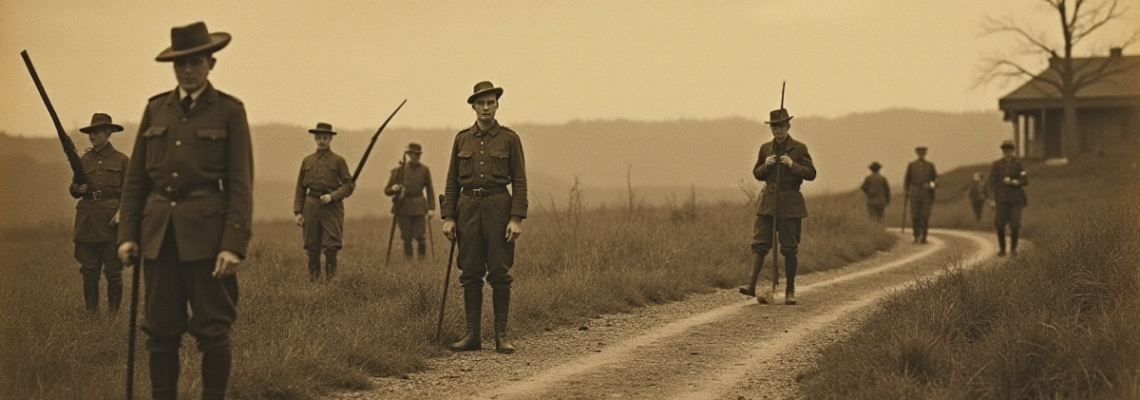
On a cool March morning in 1938, C.H. Stratton, an engineer for the U.S. Veterans Bureau, stepped off the train into the rhythms of small-town North Carolina. He was not there for a routine inspection. In his briefcase were plans, surveys, and the weight of a promise made to broken men. Delegations from Littleton, Roanoke Rapids, and Warrenton had gathered to meet him. Their mission, noted tersely in that day’s Roanoke Rapids Herald, was the survey of Panacea Springs.
The name itself was a hope: Panacea, a cure-all. This was to be no ordinary resort. In the wake of the Great War and in the grinding depths of the Great Depression, the dream was to create a sanatorium and recreational facility specifically for the nation’s veterans, leveraging the purported healing properties of local mineral springs. For men like Walter D. Cook—a 47-year-old farmer and World War veteran whose obituary appeared a few columns over in the same paper—such places represented a sliver of societal gratitude, a chance for respite from physical wounds and the invisible scars of battle.
🛡️ Browse Safely with Surfshark
VPN + Antivirus + Ad Blocker — one subscription, total protection
Get Surfshark Deal →“Delegations from Littleton, Roanoke Rapids and Warrenton met C. H. Stratton, engineer for the Veterans Bureau, Washington…”
Stratton’s arrival on March 24 was the culmination of years of local lobbying and veteran advocacy. The springs, long known to the region, were now being pitched as a national asset. The stakes were intensely human. This was 1938. The generation that had fought in the trenches of France was now in its forties and fifties, many struggling with lingering disabilities, aging bodies, and an economy that had scant place for them. A government-built haven was more than a project; it was a potential lifeline.
The Human Landscape of 1938
To understand the hope surrounding Panacea Springs, one must look at the pages of the Herald that day. The community was stitching itself together with local endeavor. The Kiwanis Club was preparing its annual show, “Rollin’ Rhythm,” to fund a dental clinic for 1,200 children and an open-air skating rink. Their slogan: “Help Us Help Them.” High school baseball was a serious pursuit, with the Yellowjackets facing a tough schedule despite their star pitcher’s broken leg. Girl Scouts learned about charm and hygiene at a local beauty shop. Dr. Sam Maxwell held well-attended revival services at Rosemary Methodist Church.
And there was death. Walter D. Cook was buried that week, survived by a wife, a mother, and several children. He was one of millions of veterans navigating a peace that was often as challenging as war. His story, ending quietly on a farm near Seaboard, underscored the silent need the Panacea Springs project aimed to address. It wasn’t just about convalescence; it was about dignity, community, and a tangible acknowledgment of sacrifice.
The Bureaucratic Frontier
C.H. Stratton represented the federal government’s tangible, if slow-moving, response. The Veterans Bureau (a predecessor to the Veterans Administration) was a sprawling, often overwhelmed agency. Sending an engineer from Washington to rural North Carolina signaled serious consideration. Stratton’s task was to assess the feasibility: Were the springs sufficient? Was the land suitable? Could a modern therapeutic facility be built and sustained?
The local delegations meeting him were likely a mix of hopeful civic boosters and weary veteran advocates. For the towns, the project meant jobs, infrastructure, and prestige. For the advocates, it was about securing a legacy of care. They were operating in the shadow of the massive New Deal public works projects, but also in the looming shadow of another war in Europe. Resources and attention were finite.
What Happened Next? The Fate of a Dream
The historical record of Panacea Springs after March 24, 1938, grows faint, which in itself tells a story. Despite the promising survey and local enthusiasm, the grand federal resort never materialized. The reasons are etched in the era’s complexities. By the late 1930s, New Deal spending was being reined in. The political focus was shifting from domestic recovery to the gathering storm in Europe and Asia. Large-scale civilian conservation and works projects gave way to preparations for military production.
Most pivotally, the veteran population itself was about to be eclipsed. In just over four years, the D-Day landings would create a new, vastly larger generation of veterans—the G.I.s of World War II. The national veteran infrastructure would expand dramatically to serve them through the G.I. Bill and a new network of VA hospitals. The specific, localized dream of a healing spring for the aging “doughboys” of the First World War was ultimately lost in this seismic demographic and bureaucratic shift.
The springs themselves likely remained a local curiosity, perhaps used privately, but the vision of a federally-sanctioned haven faded. The promise met the hard realities of budget, timing, and changing national priorities.
Why This Matters Today
The story of Panacea Springs is more than a footnote about a failed project. It is a poignant lens through which to view America’s evolving, and often fraught, covenant with those who serve in its wars. The gathering on March 24, 1938, represents a moment of localized, earnest attempt to fulfill that promise. It highlights the gap between community-level understanding of veterans’ needs and the slow, politicized machinery of federal response.
Today, as we grapple with the care for veterans of Vietnam, Iraq, and Afghanistan—with debates over PTSD treatment, veteran suicide, and VA hospital access—the core challenge remains unchanged: how does a nation translate gratitude into effective, lasting care? The journey of C.H. Stratton to North Carolina reminds us that these debates have deep roots. They are not merely contemporary policy issues but ongoing chapters in a national story about obligation, memory, and healing.
Finally, this slice of history from a single newspaper page connects us to the human texture of the past. It ties the revival sermon of Dr. Maxwell, the baseball hopes of the Yellowjackets, the mourning for Walter Cook, and the civic hustle of the Kiwanis Club to a larger national narrative. It shows how grand federal projects and intimate local lives were intertwined. On this day in history, March 24, 1938, in Roanoke Rapids, the dream of a healing spring was still alive, a testament to a community’s effort to honor its own, and a reminder of the promises that are made, surveyed, and sometimes, quietly left on the drawing board.
🛡️ Browse Safely with Surfshark
VPN + Antivirus + Ad Blocker — one subscription, total protection
Get Surfshark Deal →🛡️ Total Device Protection
Surfshark Antivirus — lightweight, real-time threat detection on all devices
Get Surfshark Antivirus →