This article contains affiliate links. We may earn a commission at no extra cost to you if you make a purchase through our links.
The Discovery in the Dust
The Atacama Desert doesn’t give up its secrets easily. It is a place of crushing silence and blinding light, where the wind sculpts dunes of salt and sand, and the very air seems to drink ambition. On March 24, 1870, that silence was broken by the sharp clink of a prospector’s pick. The man was José Díaz Gana, a seasoned Chilean miner leading a small, desperate party through the desolate Bolivian territory. They were chasing rumors, the whispers of ‘color’—the telltale stain of mineral wealth. When Gana’s tool struck not just rock, but a glittering vein of silver so rich it seemed to bleed metal, the shout that echoed across the barren canyon of Caracoles was more than a cry of triumph. It was a detonation.
In that instant, the geopolitical map of South America began to tremble. Gana had not just found fortune; he had stumbled into a powder keg. The silver ores of Caracoles lay in a region claimed by Bolivia, but they were discovered by Chileans, in a desert where the borders were as shifting as the sands and the real sovereignty was held by the companies—mostly Chilean and British—that extracted nitrate. The find sparked the last and most frantic of Chile’s silver rushes. Within months, the barren outpost would swell into a raucous mining camp of 10,000 souls, a chaotic boomtown of hope, greed, and lawlessness. But the real drama wasn’t in the saloons or the mine shafts. It was in the distant capitals of La Paz and Santiago, where the discovery of Caracoles became the first, irrevocable move in a diplomatic chess game that would end in catastrophe.
🛡️ Browse Safely with Surfshark
VPN + Antivirus + Ad Blocker — one subscription, total protection
Get Surfshark Deal →A Desert of Contested Bones
To understand the stakes of that day in March, you must understand the Atacama. In the 1870s, it was not seen as a wasteland, but as a treasure chest. Its real prize was nitrate—saltpeter—the essential fertilizer and gunpowder ingredient fueling the world’s industrial and agricultural revolutions. Bolivia, Peru, and Chile all laid claim to slices of this barren but lucrative coast. The borders were ill-defined, a legacy of Spanish colonial administration, and were essentially enforced by whose citizens and capital were on the ground.
Into this tense arena walked men like José Díaz Gana. He was emblematic of a breed: tough, mobile, and fiercely Chilean, part of a wave of miners and entrepreneurs who saw the Atacama as their natural frontier. When his party registered the Caracoles claim, they did so under Bolivian law, as they were technically in Bolivia. But the capital, the expertise, and the overwhelming majority of the miners flooding in were Chilean. The Bolivian government in La Paz, led by President Mariano Melgarejo (and later Agustín Morales), viewed this influx with deep suspicion. Here was a wealthy foreign enclave, operating with immense autonomy on its soil, and it was growing richer by the day from Bolivian resources.
The immediate conflict was over taxes. Bolivia, perpetually cash-strapped, saw Caracoles as a new revenue stream. In 1872, it attempted to levy a new export tax on the silver. The Chilean miners and the powerful Antofagasta Nitrate & Railroad Company, a Chilean-British conglomerate that dominated the region, refused. They argued they were protected by an 1874 treaty which capped taxes on Chilean interests. Bolivia saw it as a matter of sovereignty; Chile saw it as a breach of contract. The dispute over a few centavos on a pound of silver became a symbol of a much larger question: Who truly controlled the Atacama?
The Powder Keg Ignites
The diplomatic wrangling festered for years, poisoned by mutual distrust and nationalist fervor. Caracoles had demonstrated the volatile mix: incredible wealth lying in territorially ambiguous land, exploited by one nation but claimed by another. The silver rush had drawn a clear line in the sand. Chilean newspapers railed against Bolivian “ingratitude” and “despotism.” Bolivian politicians denounced Chilean “economic imperialism” and “colonization.”
The situation reached its breaking point not over silver, but over nitrate. In 1878, the Bolivian congress, under President Hilarión Daza, violated the 1874 treaty by imposing a substantial new tax on the Antofagasta Company. When the company, backed by the Chilean government, refused to pay, Bolivia threatened to seize its assets. On February 14, 1879, Chilean troops landed and occupied the port of Antofagasta. The War of the Pacific had begun. Peru, bound by a secret alliance with Bolivia, was quickly drawn in.
The discovery at Caracoles was the spark. It concentrated Chilean economic power directly in the heart of disputed Bolivian territory, creating a friction point that made the larger, inevitable conflict over nitrate not just possible, but probable.
What Happened Next: Desert, Blood, and New Borders
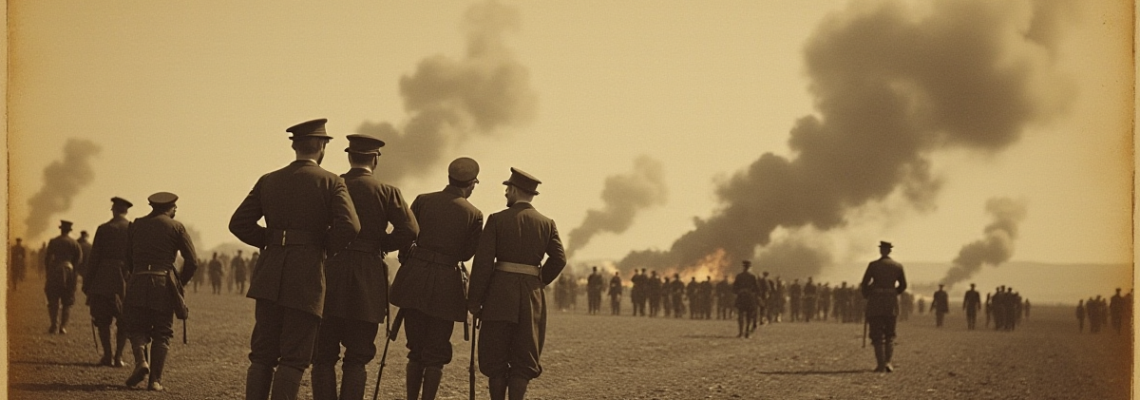
The war that followed was a brutal, technologically advanced conflict fought in the world’s driest desert. Chile, with its superior navy and more disciplined army, emerged utterly victorious by 1883. The consequences were staggering. Bolivia lost its entire Pacific coastline, becoming a landlocked nation—a traumatic national wound that persists to this day. Peru lost its southern nitrate-rich province of Tarapacá. Chile, meanwhile, nearly doubled its territory and gained a monopoly on the world’s nitrate supply, fueling a national economic golden age.
And what of Caracoles? The silver boom was spectacular but short-lived. By the mid-1880s, the richest veins were depleted, and the desert winds began to reclaim the ghost town. José Díaz Gana faded from the headlines, his moment of discovery swallowed by the vast historical forces it helped unleash. The mines that once promised fortune became silent monuments to a different kind of yield: the geopolitical harvest of ambition and conflict.
Why This Matters Today
The story of March 24, 1870, is more than a footnote about a mining strike. It is a masterclass in how the pursuit of resources shapes destiny. We see the same dynamics today: contested seabeds believed to hold oil and gas, strategic minerals essential for technology fueling new “great games” in Africa and Asia, and diplomatic crises sparked by water rights in arid regions. The Caracoles discovery reminds us that economic footholds, established in resource-rich areas, can become geopolitical facts on the ground, altering the balance of power and setting the stage for future conflict.
Furthermore, the legacy of that day is viscerally alive in South America. Bolivia’s longing for a sovereign access to the sea remains a central plank of its foreign policy and a persistent source of tension with Chile. The War of the Pacific defined national identities—for Chile, as a moment of military and economic triumph; for Bolivia and Peru, as a foundational injustice. The borders drawn by that war are the modern borders on the map. A prospector’s lucky strike on a dusty afternoon didn’t just unearth silver; it helped carve nations.
So, on this day in history, March 24, we remember a sound in the desert. It was the sound of metal on rock, of hope, and of a fuse being lit. It teaches us that history often turns not on grand declarations or battles, but on the quiet, gritty discoveries that rearrange the world’s desires and, in doing so, redraw its maps in blood and ink.
🛡️ Browse Safely with Surfshark
VPN + Antivirus + Ad Blocker — one subscription, total protection
Get Surfshark Deal →🛡️ Total Device Protection
Surfshark Antivirus — lightweight, real-time threat detection on all devices
Get Surfshark Antivirus →