This article contains affiliate links. We may earn a commission at no extra cost to you if you make a purchase through our links.
The Quitclaim
The crisp, late-March air carried the scent of damp earth and diesel from the Sacramento River tugboats as the deed was signed. In a quiet office, likely smelling of old paper and floor polish, the State of California relinquished its claim to a piece of itself. For the sum of $5,258.20, a speck of land known as Chain Island passed from the public trust into the private hands of Russell Gallaway III, a Sacramento businessman. The transaction, recorded on March 25, 1959, was a bureaucratic whisper in a year of roaring headlines—the dawn of the space race, Castro’s march into Havana, the birth of Barbie. Yet, this sale of 57 acres of tule reeds and shallow sloughs marked the quiet closing of a frontier and the beginning of a new, contentious chapter for California’s most vital and contested ecosystem: the Sacramento-San Joaquin River Delta.
The Island That Wasn’t
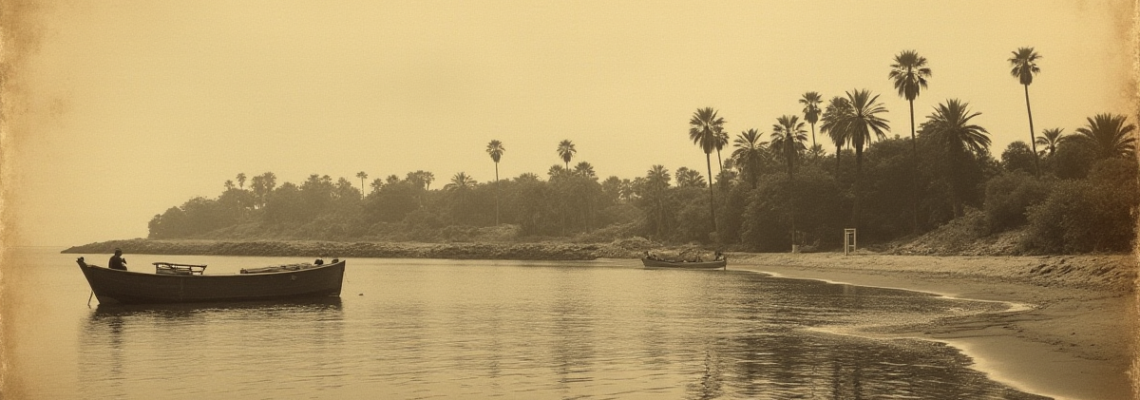
To understand the stakes of that day, one must first understand Chain Island. It was less an island in the classic, palm-fringed sense and more an emergent puzzle piece of the Delta’s vast aquatic maze. Located in Contra Costa County, near the confluence of the San Joaquin River and the meandering Old River, it was part of a sprawling archipelago of over a thousand islands, most reclaimed by ambitious 19th-century settlers who built levees, drained the marshes, and created some of the world’s richest farmland from peat soil. Chain Island, however, resisted full domestication. It was a place for duck hunters, fishermen, and, according to some old charts, a convenient marker for river pilots navigating the shifting channels that fed San Francisco Bay.
🔒 Protect Your Privacy Online
Get up to 80% off NordVPN — the #1 rated VPN service
Get NordVPN Deal →Its sale was not an anomaly but part of a long, fraught history. The State Lands Commission, the entity that handled the transaction, had for decades been tasked with managing millions of acres of so-called “swamp and overflowed lands” granted to California by the federal Swamp Land Acts of 1850 and 1860. The mandate was quintessentially American: reclaim, sell, develop, and improve. For a century, the state had offloaded these watery parcels to farmers, railroads, and speculators, fueling the agricultural empire of the Central Valley. Chain Island was one of the last holdouts.
The Buyer and His Retreat
The buyer, Russell Gallaway III, was a figure straight out of a John Cheever story—a successful, mid-century businessman seeking a pastoral escape. He was the head of Gallaway’s, a well-known furniture and appliance store on K Street in Sacramento, a pillar of the city’s burgeoning post-war consumer economy. For Gallaway, Chain Island wasn’t an investment in farmland; it was a purchase of solitude. His plan, as reported, was to use it as a “hunting and fishing retreat.” In the booming, suburbanizing California of 1959, the dream of a private wilderness, a kingdom of one’s own reachable only by boat, held powerful appeal. It was the last gasp of the gentleman sportsman’s ideal, applied to a landscape that was rapidly being engineered into submission by the massive pumps of the new State Water Project.
For the state, the sale was closing a ledger. For Gallaway, it was buying a dream. For the Delta, it was one more stitch in a fabric of private ownership that would soon tear under immense pressure.
The Unseen Stakes: Water, Subsidence, and a Shifting Consciousness
The real significance of March 25, 1959, lay not in the price per acre, but in the timing. The sale occurred at the precise pivot point between two eras of California’s relationship with its water. The great dam-building era of Hoover, Shasta, and Friant was concluding. The era of the environmental movement was just over the horizon. In 1959, the Delta was primarily seen as a conduit—a giant plumbing junction where fresh water from the north was siphoned south to the San Joaquin Valley and Los Angeles.
But the Delta’s islands, built on peat, were literally sinking. As the soil dried and oxidized from farming, the land subsided, putting immense strain on the fragile levees. The catastrophic floods of the 1950s had already shown the system’s vulnerability. When the state sold Chain Island, it was divesting not just land, but a liability. The responsibility for maintaining those bulwarks against the river—a cost that would balloon with time—now fell to a private citizen.
Furthermore, the sale happened in a legal and ecological blind spot. The concept of “public trust”—the idea that certain resources like navigable waters and the lands beneath them are preserved for public use—was not yet applied with the force it would be after the landmark Marks v. Whitney case in 1971. The full ecological value of these marginal wetlands as fish habitat, water filters, and wildlife corridors was scarcely recognized in the corridors of Sacramento. The state saw a swamp lot; a later generation would see critical ecosystem function.
What Happened Next?
Russell Gallaway III’s private retreat remained just that for a time. Chain Island, never heavily developed, lingered in private hands, its history obscure. The Delta, however, did not stand still. The following decades brought the environmental awakening of the 1960s and 70s, the fight over the Peripheral Canal, the listing of the Delta smelt as endangered, and the recognition that this 1,100-square-mile estuary was the beating heart of California’s water system—and it was in critical condition.
The islands, with their patchwork of private ownership, became the front lines. Levee breaks, like the one on nearby Jones Tract in 2004, caused billions in damage and threatened water exports for millions. The cost of maintaining this sinking, privately-owned archipelago in the face of climate change and sea-level rise has become a multibillion-dollar public dilemma. The dream of a private island retreat now collides with the reality of collective, statewide stakes.
Why This Matters Today
The story of Chain Island’s sale is a microcosm of California’s, and America’s, enduring conflict between private property rights and the public good in environmental management. That $5,258.20 transaction (about $58,000 today) severed a direct line of public stewardship, embedding a private interest in the middle of what is now understood to be a piece of critical statewide infrastructure. Today, as California debates “Delta Conveyance” and massive ecosystem restoration projects, it must constantly negotiate with the descendants of the Russell Gallaways—the private landowners who hold the deeds to the very ground that underpins the water supply for 27 million people and millions of acres of farmland.
On this day in history, March 25, 1959, a forgotten signature ended one era. It closed the book on the 19th-century project of swamp-land disposal. But it inadvertently opened another: the era of reckoning. It reminds us that the maps in a county recorder’s office tell one story—of boundaries, ownership, and price. The river tells another—of connectivity, flow, and shared fate. The long-term significance of that spring day is the lesson that in an interconnected world, there are no true private islands. Every piece of land, especially one in the heart of a fragile estuary, is a link in a chain upon which we all depend. The sale of Chain Island was the end of a simple dream of private escape, and the unwitting beginning of a complex, unfinished saga of public survival.
🔒 Protect Your Privacy Online
Get up to 80% off NordVPN — the #1 rated VPN service
Get NordVPN Deal →🔒 Stop Reusing Passwords
NordPass generates and stores strong passwords across all your devices.
Try NordPass Free →