This article contains affiliate links. We may earn a commission at no extra cost to you if you make a purchase through our links.
Out of the Darkness, a New Kind of Dawn
In the predawn hours of March 25, 1945, a low, distant hum grew into a deafening roar over the Kanto Plain. For the exhausted citizens of Tokyo, huddled in their flimsy wooden homes and makeshift shelters, the sound was a familiar herald of doom. But this raid would be different. This was not the precision high-altitude bombing of factories and docks seen earlier in the war. This was something born of a terrible, new calculus. Under the command of General Curtis LeMay, the 21st Bomber Command had unleashed its full arsenal of B-29 Superfortresses in a low-altitude, nighttime incendiary assault. Their target was not a military installation, but the very fabric of the city itself.
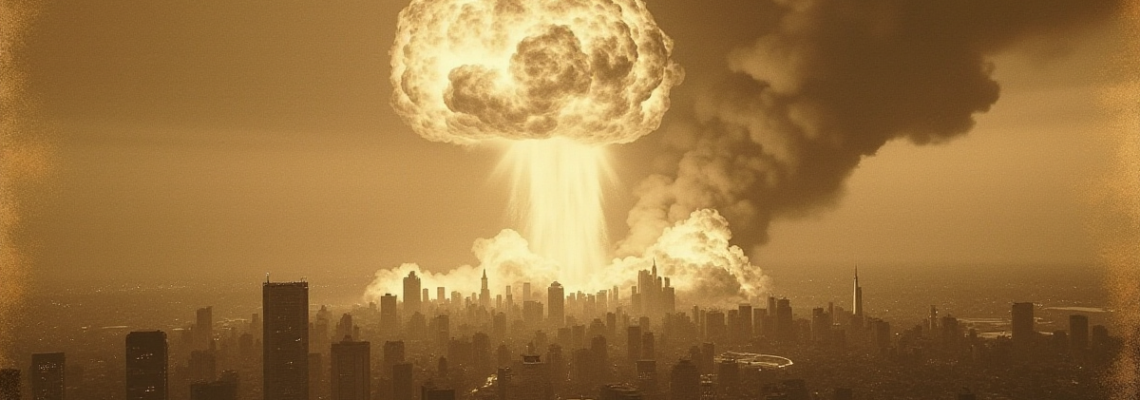
The first markers fell, magnesium flares that bathed the sprawling, densely packed residential and commercial districts in an eerie, ghostly light. Then came the M-69 incendiary clusters, tumbling from the bellies of 600 aircraft. Each bomblet, a six-pound cylinder of jellied gasoline (napalm), was designed not to explode, but to erupt into a clinging, liquid fire upon impact. Within minutes, thousands of these tiny suns bloomed across northeastern Tokyo. Fanned by a strong, seasonal wind, individual fires raced through the labyrinthine streets and leaped across narrow alleys, merging into a single, colossal firestorm. The superheated air created its own weather, sucking oxygen from shelters and generating hurricane-force winds that threw sheets of flame ahead of the main conflagration. The Sumida River, which many had seen as a potential refuge, boiled.
🔒 Protect Your Privacy Online
Get up to 80% off NordVPN — the #1 rated VPN service
Get NordVPN Deal →A Strategy of Annihilation
This raid was the brutal culmination of a strategic shift. After months of disappointing results from high-altitude precision bombing over Japan’s cloud-covered islands, the newly appointed LeMay had made a radical gamble. He stripped his B-29s of defensive guns to increase bomb load, ordered them to fly at 5,000-9,000 feet (well below the jet stream), and sent them in at night. The goal was simple and horrifying: to burn out Japan’s industrial capacity by destroying the homes of the workers who powered it, and to shatter the nation’s will to fight.
The March 9-10 raid, the first to use these tactics, had been apocalyptic, killing an estimated 100,000 people and destroying 16 square miles of the city. The March 25 raid was intended as the knockout blow, targeting areas missed in the earlier conflagration. Pilots reported the glow of the fires being visible 150 miles out over the Pacific. Navigator Lieutenant Robert Roden, flying in one of the pathfinder planes, later wrote in his diary:
“It was as if the earth had opened up. There was no ‘target,’ just an ocean of flame from horizon to horizon. The plane bucked in the thermals. We could smell it—the acrid, sweet smell of burning wood, and something else.”
The Unseen Toll and a Leader’s Silent Ride
On the ground, the human cost was staggering. Survivors spoke of streets running with molten glass, of families perishing together in suffocating heat, of a desperate, silent scramble for any patch of open ground or body of water. While the death toll from this specific raid (estimated at 3,000-8,000) was lower than the cataclysm of March 9-10, the physical destruction was vast, adding another 10 square miles of Tokyo to the wasteland.
But the most significant impact of the March 25 bombardment may have been on a single passenger in a black limousine later that morning. After the all-clear siren sounded, Japan’s aging and revered emperor, Hirohito, insisted on being driven through the smoldering ruins. This was highly unusual; the emperor was a secluded figure, his movements and views shrouded in ritual. Accompanied by his Lord Keeper of the Privy Seal, Koichi Kido, Hirohito toured the districts of Fukagawa and Honjo. He saw the mountains of charred debris, the dazed survivors picking through ashes, the skeletal remains of factories and homes.
Kido’s diary and post-war testimonies suggest this tour was a profound shock. For months, the Supreme War Leadership Council, dominated by hardliners like General Korechika Anami, had assured the emperor that Japan could still win a decisive battle on the home islands, inflicting such casualties that the Allies would sue for a negotiated peace. The reality Hirohito witnessed on March 25 made a mockery of that fantasy. The nation’s capital was being systematically erased from the map. There would be no “decisive battle” for a city—or a people—that no longer existed.
What Happened Next: The Path to Surrender
The March 25 raid did not immediately end the war. Fanatical resistance within the military hierarchy continued for five more brutal months. However, historians now point to this date as a critical turning point in the emperor’s thinking. The visceral evidence of total annihilation broke through the bubble of optimistic reports from his generals. It convinced Hirohito that Ketsu-Go (Operation Decisive), the plan for a suicidal national defense, was not a path to honor, but to national extinction.
From this point forward, Hirohito, working through Kido and other moderate advisers like Foreign Minister Shigenori Togo, began a cautious, secretive campaign to find a way to end the war. This “peace party” maneuvered around the militant army faction, eventually leading to the emperor’s unprecedented personal intervention in the August Imperial Conferences and his radio address announcing surrender on August 15—a speech referencing the “new and most cruel bomb,” but born from the accumulated terror of the firebombings that had rendered Japan defenseless.
Why This Matters Today
The last great firebombing of Tokyo stands as a grim landmark in the history of warfare, marking the full, horrifying arrival of strategic bombing against civilian populations. It sits on a direct continuum between the Blitz, the firebombing of Dresden, and the atomic attacks on Hiroshima and Nagasaki. It forces us to confront uncomfortable questions about the boundaries of military necessity, the concept of “total war,” and the moment when the destruction of an enemy’s capability morphs into collective punishment.
Furthermore, the story of March 25, 1945, is a powerful lesson in the perils of insulated leadership. Hirohito’s ride through the ashes was a belated confrontation with reality, a stark demonstration that leaders who are shielded from the consequences of their decisions can perpetuate catastrophe. In an age of satellite imagery, remote warfare, and algorithmic battlefields, the human cost of conflict can still be abstracted. This day reminds us of the imperative to see, firsthand, the true price of policy.
On this day in history, March 25, 1945, the war in the Pacific did not end, but a certain illusion of how it could be won was finally incinerated in the streets of Tokyo. It was a day of horrific suffering that, paradoxically, planted the first seed of peace in the mind of the one man who could make it possible. The legacy of that firestorm is a permanent scar and a permanent warning.
🔒 Protect Your Privacy Online
Get up to 80% off NordVPN — the #1 rated VPN service
Get NordVPN Deal →🔒 Stop Reusing Passwords
NordPass generates and stores strong passwords across all your devices.
Try NordPass Free →