This article contains affiliate links. We may earn a commission at no extra cost to you if you make a purchase through our links.
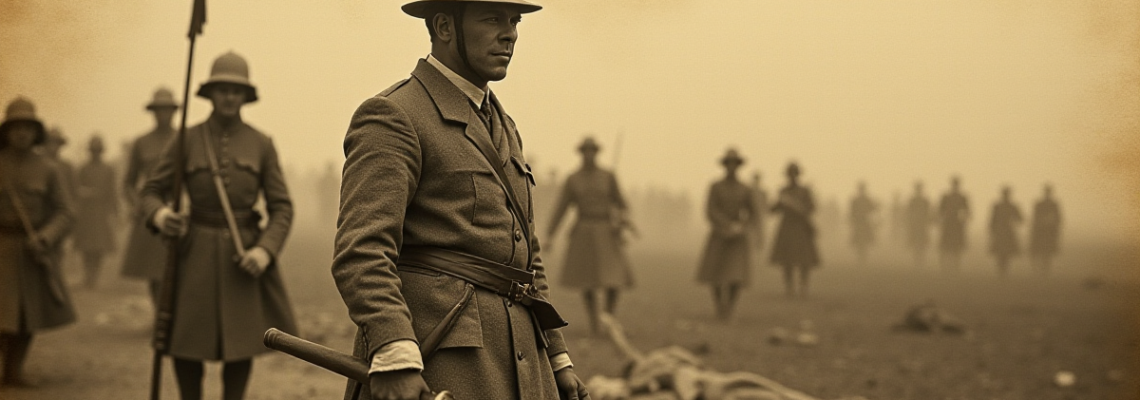
The predawn mist clung to the rugged hills surrounding Hưng Hóa in northern Vietnam, a spectral blanket muffling the sounds of movement. For the soldiers of the Guangxi Army, under the command of the veteran Chinese general, it was a familiar cloak. They knew this terrain—the dense jungle, the treacherous paths along the Red River, the way the limestone karsts rose like ancient sentinels. On the morning of March 23, 1885, they were lying in wait. Their target: a French column, confident and advancing, part of the expeditionary force tasked with securing Tonkin for the Third Republic. The French expected a mopping-up operation. What they were about to receive was a brutal lesson in asymmetric warfare, a battle that, though small in scale, would send shockwaves from the halls of the Forbidden City to the Quai d’Orsay in Paris, ultimately recalibrating the balance of power in 19th-century Asia.
The Chessboard of Empire
To understand the stakes of the skirmish at Phu Lam Tao, one must first grasp the grand imperial game being played. The Sino-French War (August 1884–April 1885) was not a conflict over a direct border, but a proxy war over a kingdom: Vietnam, or Annam as it was known to Europeans. For centuries, Vietnam had existed in a complex tributary relationship with China, acknowledging the Chinese emperor as its nominal overlord while governing its own affairs. France, however, saw things differently. Through a series of treaties and military actions in the late 19th century, they sought to absorb Vietnam into their growing Indochinese empire.
🔒 Protect Your Privacy Online
Get up to 80% off NordVPN — the #1 rated VPN service
Get NordVPN Deal →For China’s Qing Dynasty, this was an intolerable challenge. A French-controlled Vietnam on its southern border was not just a strategic threat; it was an affront to the entire Confucian world order, where China sat at the center. The aging Empress Dowager Cixi, navigating a dynasty already weakened by internal rebellion and foreign humiliation (most notably in the Opium Wars), could not afford to lose face. The Black Flag Army, an irregular force of Chinese adventurers and Vietnamese partisans, had been harassing the French for years. But by 1884, the conflict had escalated into a full-blown, if undeclared, war between regular armies.
The French commander, General Louis Brière de l’Isle, was a seasoned colonial officer. His strategy was to deliver a knockout blow by capturing Lạng Sơn, a key fortress town north of Hanoi, and pushing Chinese forces back across the border. For a time, it seemed to be working. But the Chinese, under commanders like the canny Liu Yongfu and the Guangxi officers, avoided large, set-piece battles where French firepower and discipline would dominate. Instead, they opted for ambushes, raids, and a war of attrition in the difficult terrain they knew intimately.
The Trap at Phu Lam Tao
In late March 1885, following the French capture and subsequent, controversial abandonment of Lạng Sơn, the situation was fluid and tense. A French column, likely a reconnaissance-in-force or a foraging party, was operating near Hưng Hóa. The Chinese commanders saw an opportunity. They chose their ground carefully at Phu Lam Tao, a location that favored the defender.
The battle itself was swift and brutal. As the French troops advanced, they were met not with a disorganized rabble, but with concentrated fire from well-concealed positions. The Chinese, using their knowledge of the land, channeled the French into a killing zone. The crack of French Lebel rifles was answered by the roar of Chinese artillery and the relentless volleys of infantry. The French column, caught by surprise and outmaneuvered, was mauled. While precise casualty figures from this specific engagement are debated, contemporary reports and later historians agree it was a clear tactical victory for the Chinese forces. They had successfully defended their position and inflicted significant losses, halting the French advance in that sector.
The victory at Phu Lam Tao was a proof of concept. It demonstrated that Chinese forces, when leveraging terrain and local knowledge, could defeat a modern European army in the field.
The Echoes of a Shot Not Heard
Paradoxically, the most significant consequence of the Battle of Phu Lam Tao was born from a lie. Just days before, on March 28, a French force had been defeated at the Battle of Bang Bo, which led to the panicked retreat from Lạng Sơn. In Paris, the government of Jules Ferry, the prime minister who had staked his political reputation on the Tonkin campaign, was already reeling from this news. When reports of the reverse at Phu Lam Tao filtered in, they were conflated and exaggerated in the press and political discourse. The narrative in France became one of a catastrophic, large-scale defeat.
This created the “Tonkin Affair,” a political firestorm. Ferry was denounced as a warmonger who was bleeding the treasury and French prestige for a worthless colonial adventure. On March 30, just a week after the fight at Phu Lam Tao, his government fell. France, despite having a navy that had effectively blockaded Taiwan and destroyed China’s Fuzhou shipyard, lost the political will to continue a costly ground war.
This is where the story takes its most fascinating turn. Militarily, China was in a precarious position. Yet, diplomatically, the victories at Bang Bo and Phu Lam Tao, combined with the political crisis in France, handed them an unexpected advantage. Negotiations that had been stalled suddenly gained momentum. In April 1885, the two nations signed the Treaty of Tientsin.
The Treaty and its Contradictions
On paper, the treaty was a victory for France. China agreed to recognize French protectorates over Annam and Tonkin, effectively ending the centuries-old tributary relationship. But in reality, the outcome was far more nuanced. France had been forced to the negotiating table by military setbacks and domestic unrest. Crucially, the treaty contained no war indemnity to be paid by China—a standard clause in nearly every other “unequal treaty” China signed with European powers in the 19th century. Furthermore, Chinese troops were allowed to withdraw peacefully and with honor.
For the Qing Dynasty, it was the least bad outcome in a century of humiliation. They had lost their formal suzerainty over Vietnam, but they had fought a major European power to a stalemate and avoided a crippling financial penalty. The victory at Phu Lam Tao, though a minor tactical event, was part of the cumulative pressure that produced this rare, semi-favorable result. It provided a glimmer of hope, a demonstration that European imperialism was not entirely invincible.
Why This Matters Today
The Battle of Phu Lam Tao is a classic example of a forgotten pivot in history. It reminds us that the grand narratives of empire are often decided not only in monumental, world-altering clashes, but also in obscure skirmishes whose political consequences far outweigh their military size. The fall of a government in Paris was triggered not just by a major retreat, but by the accumulated weight of smaller defeats like the one on March 23, 1885.
Furthermore, the Sino-French War and its ambiguous conclusion set patterns that resonate deeply in modern Asian geopolitics. It marked the beginning of France’s Indochina empire, a colonial project that would end in the devastating wars of the 20th century. For China, the conflict was a painful lesson in the new realities of power. While they salvaged some pride, the loss of Vietnam cemented a sense of vulnerability that would fuel nationalist and reformist movements for decades to come, contributing to the eventual collapse of the Qing Dynasty.
Today, as we observe the complex and often tense relationship between China and Vietnam, the echoes of 1885 are faint but discernible. The battle for influence in Southeast Asia, the legacy of colonial borders, and the enduring question of how regional powers interact are all themes that were powerfully activated on this day in history. The mist has long since cleared from the hills around Hưng Hóa, but the decisions made and the blood spilled there continue to shape the world we live in, a reminder that history’s quietest battles can sometimes speak the loudest.
🔒 Protect Your Privacy Online
Get up to 80% off NordVPN — the #1 rated VPN service
Get NordVPN Deal →🔒 Stop Reusing Passwords
NordPass generates and stores strong passwords across all your devices.
Try NordPass Free →