This article contains affiliate links. We may earn a commission at no extra cost to you if you make a purchase through our links.
The Tension in the Courtroom
The air in the Holt County District Courtroom was thick enough to cut with a knife. On the wooden benches, farmers in their Sunday best sat shoulder-to-shoulder, their weathered faces fixed on the drama unfolding before them. At the defense table sat Myron Irwin, his posture rigid, his eyes betraying the deep concern of a man fighting for his life. Just feet away, Robert S. Cearns, his own face a mask of grief, sat beside the prosecutors—a constant, silent reminder of the young life lost.
It was March 22, 1906, and the small town of O’Neill, Nebraska, population barely 2,000, was once again consumed by a tragedy that had unfolded nearly a year earlier in the sweeping grasslands forty-five miles northwest of town. The retrial of The State of Nebraska v. Myron Irwin was underway, a case that pitted neighbor against neighbor and had torn at the fabric of the rural community. The crime was sensational: the stabbing death of 23-year-old Robert B. Cearns during the chaotic fight against a raging prairie fire. The first trial had ended with a manslaughter conviction, but a legal technicality had granted Irwin this second chance.
🛡️ Browse Safely with Surfshark
VPN + Antivirus + Ad Blocker — one subscription, total protection
Get Surfshark Deal →A Deadly Confrontation in the Smoke
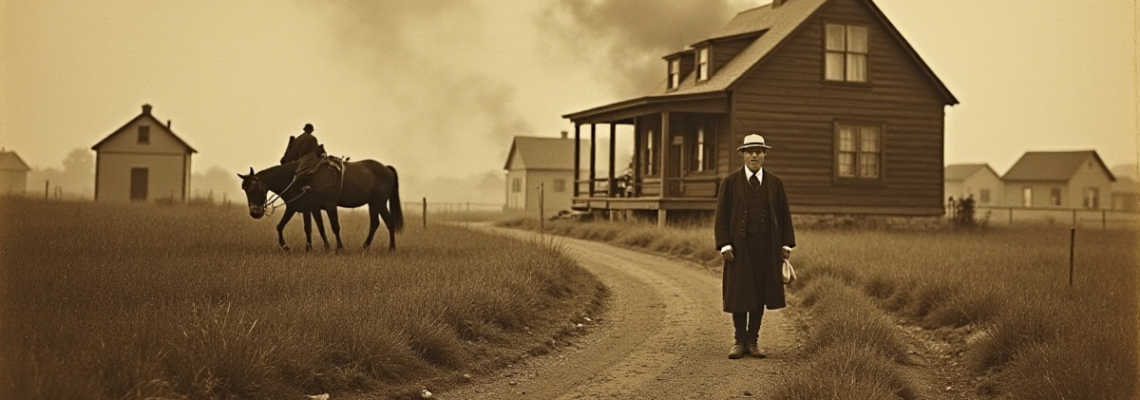
The story began on March 30, 1905, near the tiny settlement of Badger. Prairie fires were a terrifying and common threat on the Great Plains, capable of consuming miles of farmland and homesteads in hours. When a fire broke out on Myron Irwin’s property, it was all hands on deck. The code of the prairie was simple: when fire threatened, neighbors dropped everything to help. Among those who answered the call was Robert B. Cearns, a young man known in Boyd and Holt counties.
But what should have been a communal effort to combat a natural disaster turned into a scene of violence. According to reports, the firefight was the culmination of a simmering “quarrel or misunderstanding” between Irwin and Cearns. In the smoke and chaos, amidst the crackle of flames and the shouts of men, a confrontation escalated. A knife was drawn. Robert B. Cearns was stabbed, and the prairie fire that threatened to destroy property became the backdrop for a life lost.
The shockwaves rippled through the sparsely populated region. A killing at a community firefight was a profound violation of the frontier ethic. The subsequent arrest of Irwin and his first trial had already divided locals. Some saw a calculated murder; others, a tragic accident born of high tensions. The manslaughter verdict from the first trial seemed to suggest the latter, but the legal battle was far from over.
The Legal Battle Commences Anew
By March 20, 1906, the district court was back in session for the retrial. The stakes could not have been higher. The prosecution, led by County Attorney A. F. Mullen of O’Neill and Attorney Al Tingle of Butte, was determined to secure another conviction. The defense, helmed by M. F. Harrington and Dick Johnson, sought to fully exonerate their client.
The proceedings began with a significant hurdle: jury selection. The defense immediately raised concerns about potential bias, noting that Sheriff Hall, a key witness for the state, had been involved in summoning jurors. The judge agreed, appointing Frank Campbell as a special commissioner to ensure a fair panel. For nearly two days, the legal teams painstakingly questioned potential jurors until twelve men were seated: Nels Anderson, Frank Hatch, C. W. Erickson, Patrick Lynch, A. W Van Conet, Joe Benish, Clifford Thompson, Charles Allen, Julius Duft, Dan Sullivan, and George Mitchell. These were the men who would now decide Irwin’s fate.
The scale of the investigation was immense for a rural county. Subpoenas had been issued for twenty-four witnesses from across two counties. From Boyd County came William Wise, John Strain, Dr. John R. Beatty, and others. From Holt County, witnesses included John Staples, Charles B. Scott, and multiple members of the grieving Cearns family—William, John, and Ellen. One man, James Beck, was called to testify by both the prosecution and the defense, suggesting his testimony would be pivotal to both sides of the story.
What Happened Next? The Weight of the Past
The newspaper report from March 22nd captures the trial just as testimony was beginning. The outcome of this specific retrial is lost to the immediate historical record found on that day’s page. However, such cases in this era often resulted in convictions being upheld or similar sentences being passed. The very existence of a retrial speaks to the determined efforts of Irwin’s defense team and the complex, contentious nature of the case.
Whether Myron Irwin was ultimately convicted again, acquitted, or saw his sentence reduced, the tragedy left an indelible mark. For the Cearns family, it was an irreplaceable loss. For the community, it was a stark lesson in how quickly frontier life could turn from cooperation to conflict. The event underscored the immense pressures of homesteading—where disputes over land, water, or honor could fester and explode under the extreme stress of natural disasters like the ever-present threat of prairie fires.
Why This Matters Today
The story of Myron Irwin and Robert Cearns is more than a true crime footnote. It is a window into the social fabric of rural America at the dawn of the 20th century. In an age before instant communication and rapid response emergency services, communities like those in Holt County were bound by a fragile social contract. They relied on each other for survival. The breakdown of that contract, leading to violence at a moment meant for collective action, was a community trauma that resonates with anyone who has lived in a small, tightly-knit town.
Furthermore, the legal intricacies—the appeal, the concern over a biased sheriff, the careful selection of a jury—demonstrate that even in a remote Nebraska courtroom, the pursuit of justice was a complex and deeply serious endeavor. It reminds us that the true-crime stories of the past were not simple morality tales but complex human dramas with real people grappling with grief, fear, and the legal system.
On this day in history, March 22, 1906, the fate of Myron Irwin hung in the balance. But the story itself stands as a timeless reminder of how human passions can ignite, even amidst the most communal of crises, and how the quest for justice, then as now, is a complicated and deeply human pursuit.
🛡️ Browse Safely with Surfshark
VPN + Antivirus + Ad Blocker — one subscription, total protection
Get Surfshark Deal →🛡️ Total Device Protection
Surfshark Antivirus — lightweight, real-time threat detection on all devices
Get Surfshark Antivirus →