This article contains affiliate links. We may earn a commission at no extra cost to you if you make a purchase through our links.
The Sermon That Echoed in the Silence
The air in Berlin’s St. Mary’s Church was thick, not just with the March chill held at bay by hundreds of bodies, but with a palpable, electric tension. It was the evening of Saturday, March 25, 1933. Just fifty-five days earlier, Adolf Hitler had been appointed Chancellor. In the whirlwind since, the Reichstag had burned, emergency decrees had suspended civil liberties, and the first concentration camp at Dachau had opened its gates. Now, the new regime was turning its gaze to the one institution it did not yet fully control: the Protestant church. And on this night, a quiet, unassuming pastor named Friedrich von Bodelschwingh was about to deliver a sermon that would become a defining, if largely forgotten, moment of early moral resistance.
“We are not called to serve the spirit of the age, but the Spirit of God, which is eternal.”
🛡️ Browse Safely with Surfshark
VPN + Antivirus + Ad Blocker — one subscription, total protection
Get Surfshark Deal →
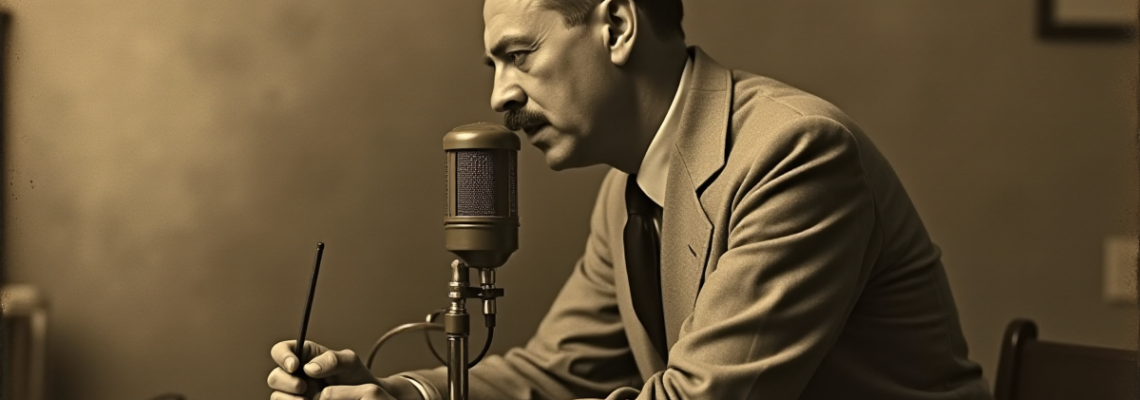
These were not Bodelschwingh’s opening words, but they formed the core of his message, broadcast live on Reichsradio to a nation holding its breath. Microphones, symbols of the regime’s powerful new propaganda arm, were trained on the pulpit. In homes from Hamburg to Munich, families gathered around their Volksempfänger radios, listening not just for spiritual guidance, but for a sign—any sign—of how to navigate the terrifying new reality. Would the church bend? Or would it break?
A Pastor, Not a Politician
Friedrich von Bodelschwingh was an unlikely figure for a showdown. At 61, he was best known not as a Berlin theologian, but as the compassionate director of the Bethel Institutions, a vast network of hospitals, epileptic colonies, and shelters for the vulnerable in Bielefeld. He was a man of practical Christian charity, revered for his work with society’s outcasts. This very reputation is what made him the leading candidate for Reich Bishop, a position the Nazi-backed “German Christians” movement aimed to create to unify and control the Protestant church under a single, compliant leader.
The German Christians, led by figures like Ludwig Müller, a military chaplain and close confidant of Hitler, preached a virulent nationalist theology. They sought to purge the church of its “Jewish” Old Testament, enforce the Aryan Paragraph (banning those of Jewish descent from ministry), and align the Gospel with Nazi racial ideology. Their rallying cry was “One People, One Reich, One Faith.”
Bodelschwingh represented the opposition: the nascent “Confessing Church” movement, which saw the Nazi co-option as a fundamental betrayal. He had no desire for the title of Reich Bishop, but as pressure mounted from church leaders terrified of a complete takeover, he reluctantly allowed his name to stand as a bulwark against Müller. The sermon on March 25 was, in essence, his public platform and his defiant statement of principles.
The Stakes in the Sanctuary
As Bodelschwingh spoke, his calm, steady voice contrasted sharply with the strident tones now commonplace on the radio. He did not mention Hitler, the SA, or the Nazis by name. He didn’t have to. His scripture—the parable of the wise and foolish builders from Matthew 7—was a pointed allegory everyone understood.
“A house built on sand,” he intoned, “cannot withstand the storm. And what is sand? It is the shifting foundation of human ideology, of pride, of the fleeting power of this world.” He spoke of the church’s duty to serve all, “the weak, the sick, the forgotten,” a direct rebuke to the regime’s emerging cult of strength and racial purity. He emphasized that the church’s authority came from Christ alone, “not from the favor of princes or the decrees of governments.”
In the pews, Gestapo agents took notes. Supporters of the German Christians shifted uncomfortably. But for many ordinary listeners, the effect was profound. Dietrich Bonhoeffer, the young theologian who would later join the resistance and be executed for his part in a plot to kill Hitler, listened intently. He would later cite this moment as a crucial spark, proof that a clear, courageous word could still be spoken. For a population already witnessing the boycott of Jewish businesses (scheduled to begin in just five days) and the silencing of political opponents, Bodelschwingh’s sermon was a fleeting echo of a moral compass that seemed to be spinning wildly.
The Aftermath: A Brief Victory, a Long Shadow
What happened next? In the short term, Bodelschwingh’s moral authority, amplified by the radio broadcast, carried the day. On April 27, he was elected Reich Bishop by a synod, a stunning defeat for the Nazi-backed faction. But it was a Pyrrhic victory. The state refused to recognize the election. The German Christians, with the full backing of the regime, launched a vicious smear campaign, questioning Bodelschwingh’s patriotism and even his sanity. Under relentless pressure and threats against Bethel, he resigned the post in June, a broken man. Ludwig Müller was installed as Reich Bishop by fiat in September.
The church struggle (Kirchenkampf) would rage for years, culminating in the Barmen Declaration of 1934, where Confessing Church leaders, including Martin Niemöller and Karl Barth, formally rejected Nazi theology. Many of its members, like Bonhoeffer and Niemöller, would end up in concentration camps. Bodelschwingh, spared imprisonment likely due to his public stature, returned to Bethel, where he performed one more act of immense courage: he systematically hid and protected Jews and the disabled from Nazi euthanasia programs, using his institution as a shield.
Why This Matters Today
On this day in history, March 25, 1933, the battle lines for the soul of an institution were drawn not with guns, but with words in a sermon. Bodelschwingh’s story is a masterclass in the early, subtle mechanics of authoritarian takeover. The regime did not begin by smashing churches; it sought to co-opt them, to use their language and infrastructure for its own ends. The first demand was not for outright obedience, but for compromise—a little alignment here, a small exclusion there, all in the name of national unity and renewal.
It reminds us that the most dangerous threats to independent institutions are often not immediate destruction, but gradual assimilation. The question posed that night in Berlin echoes through time: When a powerful state demands that a church, a university, a press, or any bedrock civil society institution conform to its ideological “spirit of the age,” what is the response? Do you build your house upon the rock of principle, knowing it may lead to marginalization or ruin? Or do you build upon the shifting sand of expediency, hoping to maintain influence while slowly surrendering your core identity?
Bodelschwingh’s last stand was ultimately overwhelmed by the tidal wave of Nazism. But the echo of his March 25 sermon—a call to build on a foundation beyond state power—resonated in the hearts of those who would continue the resistance. It stands as a poignant marker on the road to tyranny, a day when one man, amplified by the new technology of radio, used the old technology of faith to say “no” while most of the world was still learning how to say “yes.” In our own era of polarized ideologies and demands for conformity, the quiet courage of the radio pastor is a history lesson that speaks directly to our present.
🛡️ Browse Safely with Surfshark
VPN + Antivirus + Ad Blocker — one subscription, total protection
Get Surfshark Deal →🛡️ Total Device Protection
Surfshark Antivirus — lightweight, real-time threat detection on all devices
Get Surfshark Antivirus →