This article contains affiliate links. We may earn a commission at no extra cost to you if you make a purchase through our links.
The Crackle of Defiance
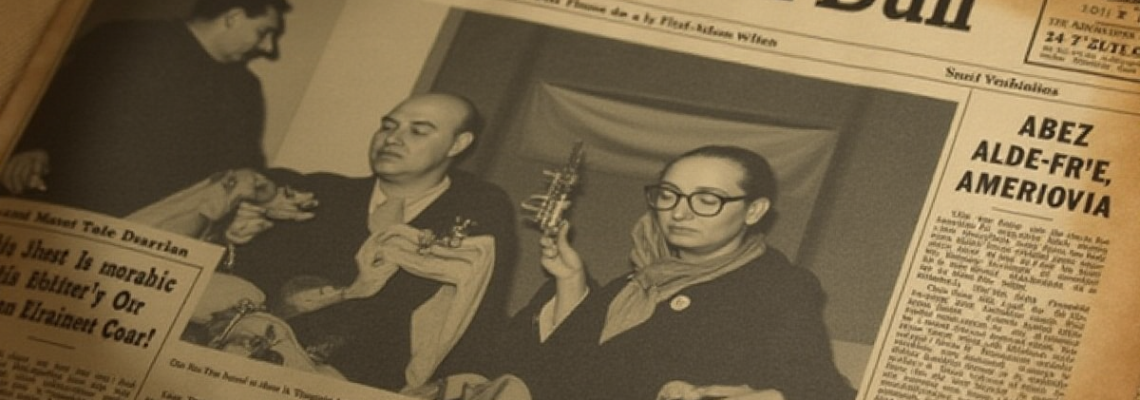
The air in the small Barcelona studio was thick with the smell of warm vacuum tubes and cold sweat. At exactly 10:00 PM on March 25, 1936, Eduard Toldrà, the station director, gave a sharp nod. A red light flickered on. Before the microphone, the renowned cellist Pau Casals, his face a mask of grim determination, drew his bow across the strings. The mournful, resonant notes of Casals’s own arrangement of El Cant dels Ocells (The Song of the Birds), a traditional Catalan lullaby, filled the room. But this was no ordinary concert for Radio Associació de Catalunya. This was a requiem. For the station, and perhaps, for the fragile dream of Catalan autonomy itself.
Outside the studio windows, the city of Barcelona buzzed with a nervous energy. Just three months earlier, a left-wing Popular Front coalition had won national elections in Spain, a victory celebrated in Catalonia as a chance to restore the self-governing powers stripped away by a centralist government. But the victory was narrow, the country polarized. In the cafés along the Rambles, anarchists debated socialists, while in the shadows, fascist Falangists plotted. The airwaves had become a critical battlefield, and Radio Associació de Catalunya, a beacon of Catalan language and culture, was in the crosshairs.
🛡️ Browse Safely with Surfshark
VPN + Antivirus + Ad Blocker — one subscription, total protection
Get Surfshark Deal →A Voice for a Nation Within a Nation
To understand the significance of that night’s broadcast, one must understand the station itself. Founded in 1925, Radio Associació de Catalunya was more than a broadcaster; it was a cultural institution. In an era when Castilian Spanish was aggressively promoted as the sole language of the Spanish state, this station broadcast news, music, plays, and poetry exclusively in Catalan. It gave a voice to a culture that the dictatorship of Miguel Primo de Rivera had tried to suppress. For the millions of Catalans who tuned in, the station was a daily affirmation of their identity.
The station’s director, Eduard Toldrà, was not a politician but a respected composer and violinist. He believed in the power of art to unite and uplift. Under his guidance, the station featured the finest Catalan artists, from the fiery oratory of politician Lluís Companys to the sublime music of Pau Casals. But as the political temperature rose in the spring of 1936, the station’s cultural mission was increasingly interpreted as a political act. For the right-wing military officers and politicians in Madrid, its very existence was an affront to Spanish unity.
The Gathering Storm
The trigger for the crisis came on March 12, 1936. A new, conservative-led government, led by Manuel Portela Valladares but heavily influenced by the military, took power in a contentious parliamentary maneuver. One of its first acts was to target symbols of regional dissent. Citing a dubious, rarely enforced broadcasting law from the Primo de Rivera era, the government issued a decree: all radio stations were required to broadcast a significant portion of their programming in Castilian. The unstated target was clear.
Toldrà and the station’s board were faced with an impossible choice. Complying meant betraying their core mission and alienating their listeners. Defying the order meant certain closure and possible arrest. For nearly two weeks, they engaged in a frantic, behind-the-scenes battle, sending telegrams to Madrid, appealing to sympathetic politicians, and publishing editorials in the Catalan press. But the government, under pressure from generals like Francisco Franco and Emilio Mola, who saw any regionalism as a threat, remained unmoved. The deadline for compliance was set for midnight, March 25.
The Final Transmission
Instead of surrendering, Toldrà decided on a final act of defiance. He would turn the station’s last night of legal Catalan-language broadcasting into a grand, public demonstration of cultural resilience. The program was a carefully curated tribute to Catalonia. There were readings from the medieval chronicles of Ramon Muntaner, folk songs from the cobblestone streets of Girona, and a live performance by the Orfeó Català choir.
The climax was the appearance of Pau Casals, the world’s greatest cellist and a staunch Catalan patriot. As Casals played El Cant dels Ocells, a hush fell over the city. In homes, cafés, and town squares where radios were placed in windows for public listening, people wept. The simple, haunting melody was a symbol of peace, but on this night, it was a cry of resistance.
“We close our transmission tonight not with a word of defeat, but with a song of hope,” Toldrà’s voice crackled over the airwaves after the music faded. “The airwaves may be silenced by decree, but the voice of a people, rooted in a thousand years of history, can never be extinguished. Goodnight, Catalonia. We will speak again.”
At five minutes to midnight, the station signed off. The silence that followed was deafening.
What Happened Next?
The closure of Radio Associació de Catalunya was a stark signal that the democratic process in Spain was breaking down. It was a minor skirmish that foreshadowed a major war. Just over three months later, on July 17, 1936, the military rebellion Toldrà and Casals had feared began, plunging Spain into a brutal three-year civil war.
General Franco’s Nationalist forces, victorious in 1939, would enforce a brutal repression of Catalan language and culture for nearly four decades. Speaking Catalan in public was banned, and the very symbols celebrated on that final broadcast were driven underground. Eduard Toldrà was forced into internal exile, his career stymied. Pau Casals, vowing not to perform in any country that recognized Franco’s regime, began a lifelong exile, his cello becoming a powerful symbol of protest.
Why This Matters Today
The story of the last broadcast on March 25, 1936, is more than a historical footnote. It is a potent reminder that the control of information is often the first front in the battle for political control. The silencing of a radio station was a canary in the coal mine for the death of a democracy. It demonstrates how attacks on cultural expression—on language, art, and media—are rarely just about culture; they are about power and the right to self-determination.
Today, in an age of digital media and information warfare, the lessons of that night in Barcelona resonate powerfully. The struggle between centralized authority and regional identity continues to shape politics from Europe to the Middle East. The story reminds us that when independent voices are silenced, it is often a prelude to a far greater darkness. The defiant notes of Casals’s cello, broadcast on this day in history, echo down the decades as a testament to the enduring power of cultural resistance in the face of oppression.
🛡️ Browse Safely with Surfshark
VPN + Antivirus + Ad Blocker — one subscription, total protection
Get Surfshark Deal →🛡️ Total Device Protection
Surfshark Antivirus — lightweight, real-time threat detection on all devices
Get Surfshark Antivirus →