This article contains affiliate links. We may earn a commission at no extra cost to you if you make a purchase through our links.
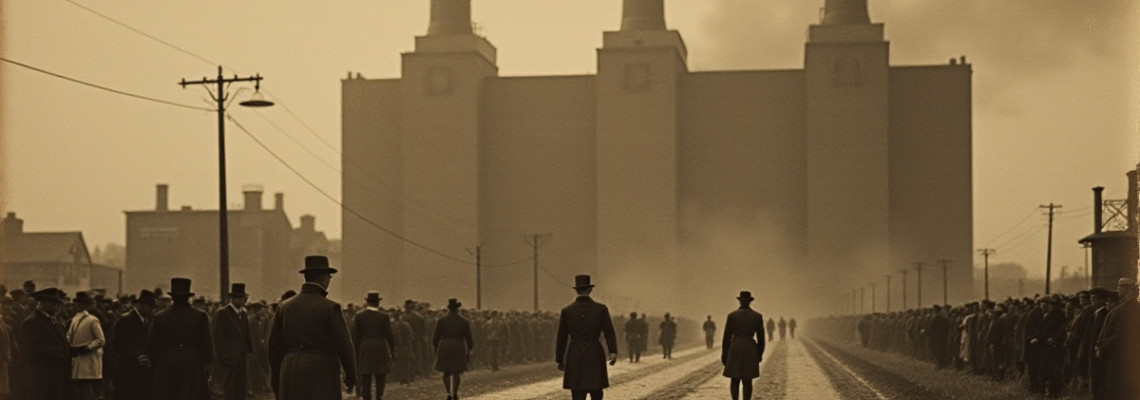
The morning of March 18, 1946 dawned cold and gray over Durham, North Carolina. By 6 a.m., when the first shift at Liggett & Myers Textile Mill was scheduled to begin, the plant gates remained closed. Some 400 workers stood in a picket line outside the brick factory, their breath visible in the chill air. Behind them, inside the silent mill, the looms sat idle for the first time in four years—untended, gathering dust, waiting. The strike had begun, and nobody in Durham knew how long it would last or what it would cost.
At first glance, this appeared to be just another labor dispute in a year thick with them. 1946 was shaping up to be the most strike-ridden year in American history. Across the country—in coal mines, steel plants, automotive factories, and textile mills—workers were walking out, demanding better wages and conditions. What made the Durham action different, however, was what it represented: a direct challenge to the paternalistic order that had governed Southern mill towns for decades.
The Boom Years That Betrayed the Workers
During World War II, Liggett & Myers and mills like it had operated at full capacity, producing fabric for Army uniforms, canvas for tents, materials for parachutes. Workers had labored long shifts—ten, sometimes twelve hours a day. The company had posted record profits. Annual revenue at L&M had nearly tripled. Management threw parties celebrating the war effort. Local newspapers ran photos of smiling workers, all captioned with messages about patriotic sacrifice.
What the photographs didn’t show was the reality inside the mill. Wages had remained essentially flat during the war years, even as prices for food, rent, and coal climbed. A mill worker in 1946 earned roughly $15 per week—the same as they had in 1942. Meanwhile, managers and owners had seen their salaries rise steadily. The company store marked up prices 30 percent. Families living in mill-owned houses (a common practice that kept workers dependent on employers) had seen their rent creep upward without explanation.
The workers had been told this was their duty—to sacrifice, to help win the war. But by March 1946, with the war over and the company’s order books still full, patience had worn dangerously thin.
The Spark That Lit It
The immediate trigger for the strike came when management announced a wage cut. With wartime contracts ending, L&M declared, they needed to reduce costs. Workers would see their weekly pay cut by roughly 10 percent. No negotiation was offered. The decision was presented as fait accompli.
Among the first to react was Thomas Briggs, a 52-year-old loom operator who had worked at L&M for 18 years. Briggs had a reputation as a fair man, not a firebrand, but he had seen enough. He approached the union organizer, a young man named David Chen who had arrived in Durham two months earlier to begin organizing for the Congress of Industrial Organizations (CIO). “We’re done waiting,” Briggs told him. “We won the war. Now we want what we’re owed.”
Within three days, a strike vote had been called. The union, officially the National Textile Workers Union, had only been operating in Durham for a few months, but the message resonated. The workers felt, for perhaps the first time, that they had leverage. The nation needed cloth; the nation needed their labor. Why should they accept less than they had earned before the war?
On March 18, they found out.
What Was Really at Stake
The strike wasn’t merely about wages—though $15 a week was poverty wages for a family with children. The deeper issue was dignity. For generations, Southern mill owners had ruled their workers like feudal lords. Company towns meant company control: where you lived (in company houses at company rents), where you shopped (the company store, at company prices), what you could say (criticism of management could get you evicted and blacklisted). Mill workers were expected to be grateful for employment, not demanding.
But the war had changed something. Thousands of workers had left the mills to serve in the military or work in better-paying defense factories. Some had seen other parts of the country. They had tasted different wages, different possibilities. The men and women who returned to the mills in 1945 and early 1946 were not the same people who had left in 1942. They knew their labor had value. They knew they had other options.
The strike was also, whether workers fully articulated it or not, about the right to organize. Southern mill owners had successfully resisted unionization for decades. They had hired thugs to break strikes, cultivated political alliances with local sheriffs and judges, and spread the gospel that unions were un-American. The South had remained largely non-union, a bastion of cheap labor that attracted Northern manufacturers.
If the CIO could establish a foothold in Durham, it would change everything.
The Standoff
Company management was unmoved. L&M’s general manager, Frederick Ashby, issued a statement: the company would not negotiate with strikers. “The door to our offices is open to individual workers who wish to discuss returning to work at our new rates,” he said coldly. “We have no interest in bargaining with outside agitators from the CIO.”
Ashby had miscalculated badly. The company’s attempt to divide workers by offering to negotiate individually failed entirely. Not a single worker crossed the picket line. The unity was remarkable—even the skeptical older workers, who remembered the failed strikes of earlier decades, stayed the course.
Days turned into weeks. By early April, the strike had attracted attention from national labor leaders and sympathetic newspapers. Eleanor Roosevelt, in her syndicated column, wrote favorably about the Durham workers’ plight. The CIO sent funds to support strikers’ families. And slowly, local opinion began to shift. Business owners downtown saw their sales drop as strikers had less money to spend. Newspapers that had reflexively sided with management began publishing letters from workers’ wives, describing children going to school hungry, families unable to pay the doctor.
Resolution and Ripples
After 47 days, management capitulated—partially. Workers would receive a 5 percent wage increase, less than the 10 percent cut they’d been threatened with, but more than nothing. More importantly, the company agreed to recognize the union and to negotiate collective bargaining agreements in the future. It was a modest victory, but it was a victory.
Thomas Briggs and David Chen stood together outside the mill gates on April 23 when workers voted to return. There were tears, and there was celebration. The Durham textile strike of 1946 became a symbol of labor’s power in the post-war era, and it helped catalyze the unionization of textile mills across the South—a process that would accelerate over the next two decades.
Why This Matters Today
The Durham strike is more than a forgotten footnote in labor history. It represents a pivotal moment when working people, emboldened by their own essential role in the nation’s survival during wartime, demanded to be treated with dignity and compensated fairly for their labor. It’s a story about workers’ power—and about what that power was able to accomplish when workers stood together.
In the decades following 1946, union membership would peak and then decline. Today, as union membership in America sits at historic lows and workers once again struggle with stagnant wages in the face of rising costs, the Durham story offers a lesson often forgotten: change doesn’t come from above. It comes from ordinary people who decide their labor has value and have the courage to say so, together. Thomas Briggs didn’t have social media or a national platform. He had co-workers, a conviction, and a willingness to risk his job. Sometimes, that was enough.